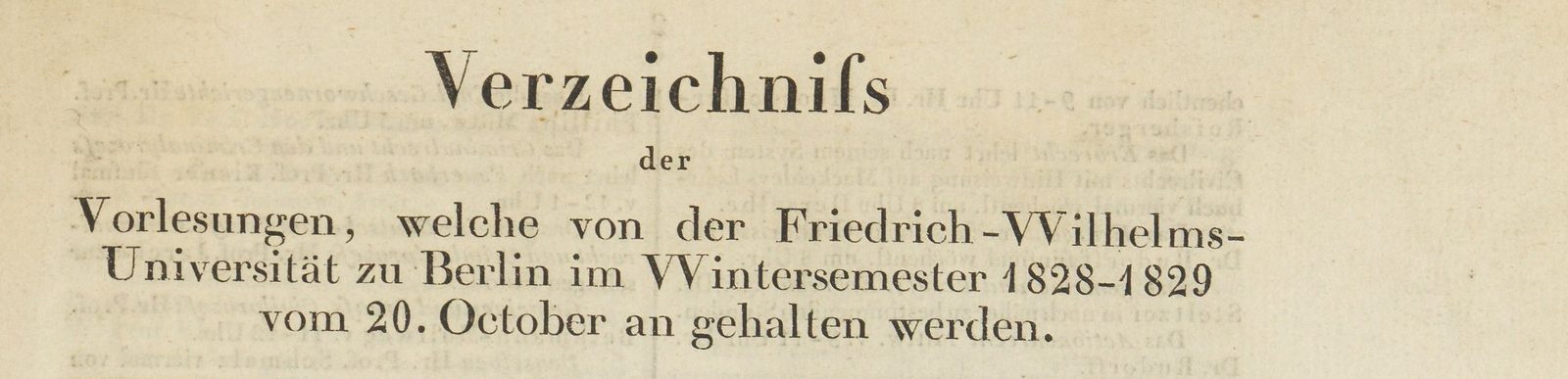
In the autumn of 1828 the University of Berlin printed a booklet listing every lecture course to be given that winter — a Verzeichniß der Vorlesungen.
Philosophy listings appear on page four.
The university had just been given a new name: Friedrich-Wilhelms-Universität.
The institution had been opened by Wilhelm von Humboldt eighteen years earlier, in 1810.
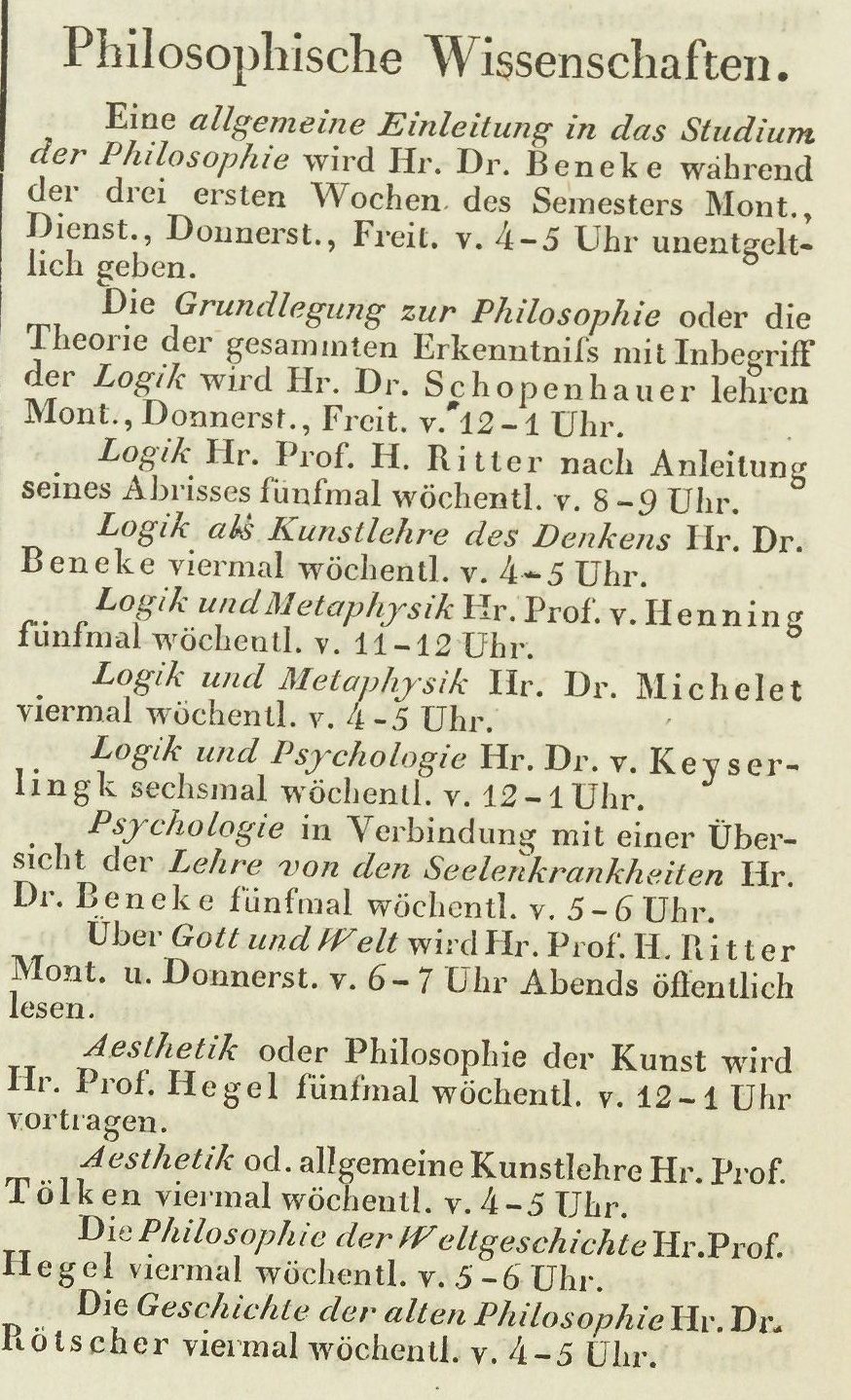
On page four, second column: Philosophische Wissenschaften — Philosophical Sciences.
Each entry lists the subject, the lecturer, how many times a week it meets, and the hour.
Aesthetik oder Philosophie der Kunst wird Hr. Prof. Hegel fünfmal wöchentl. v. 12–1 Uhr vortragen.
Aesthetics, or the philosophy of art. Professor Hegel. Five times a week, twelve to one p.m.
He had given the course three times before, in 1820/21, 1823 and 1826. This is the fourth and final time Hegel gave the course.
Michelet and von Henning, who are listed as lecturing on logic and metaphysics on this page, will edit Hegel's collected works after he dies. Tölken — the second man appointed to teach art history at the Friedrich-Wilhelms-Universität, and the first to hold a doctorate — is offering another aesthetics course, four afternoons a week, two entries below Hegel's.
He turns up again three pages later, under a heading of its own: Kunstgeschichte — Art History.
Higher up in the same column, a private lecturer with no salary and barely any students also has a lecture series listed.
Die Grundlegung zur Philosophie … wird Hr. Dr. Schopenhauer lehren Mont., Donnerst., Freit. v. 12–1 Uhr.
Monday, Thursday, and Friday: Twelve to one p.m., the same time as Hegel's lectures.
Schopenhauer had done this before: in 1820 he had put his lectures at the same hour as Hegel's on purpose, and been humiliated — only a handful of students came to his lectures, while Hegel's were full. Eight years later he is still booking times opposite Hegel's.
The people who sign up for Schopenhauer's lectures this winter are a privy councilor, a dentist, a captain and a riding master — not one of them a philosophy student, and, in his biographer's phrase, “dilettantes upon whose attendance one could not count.” He will not make it through a complete cycle of lectures.
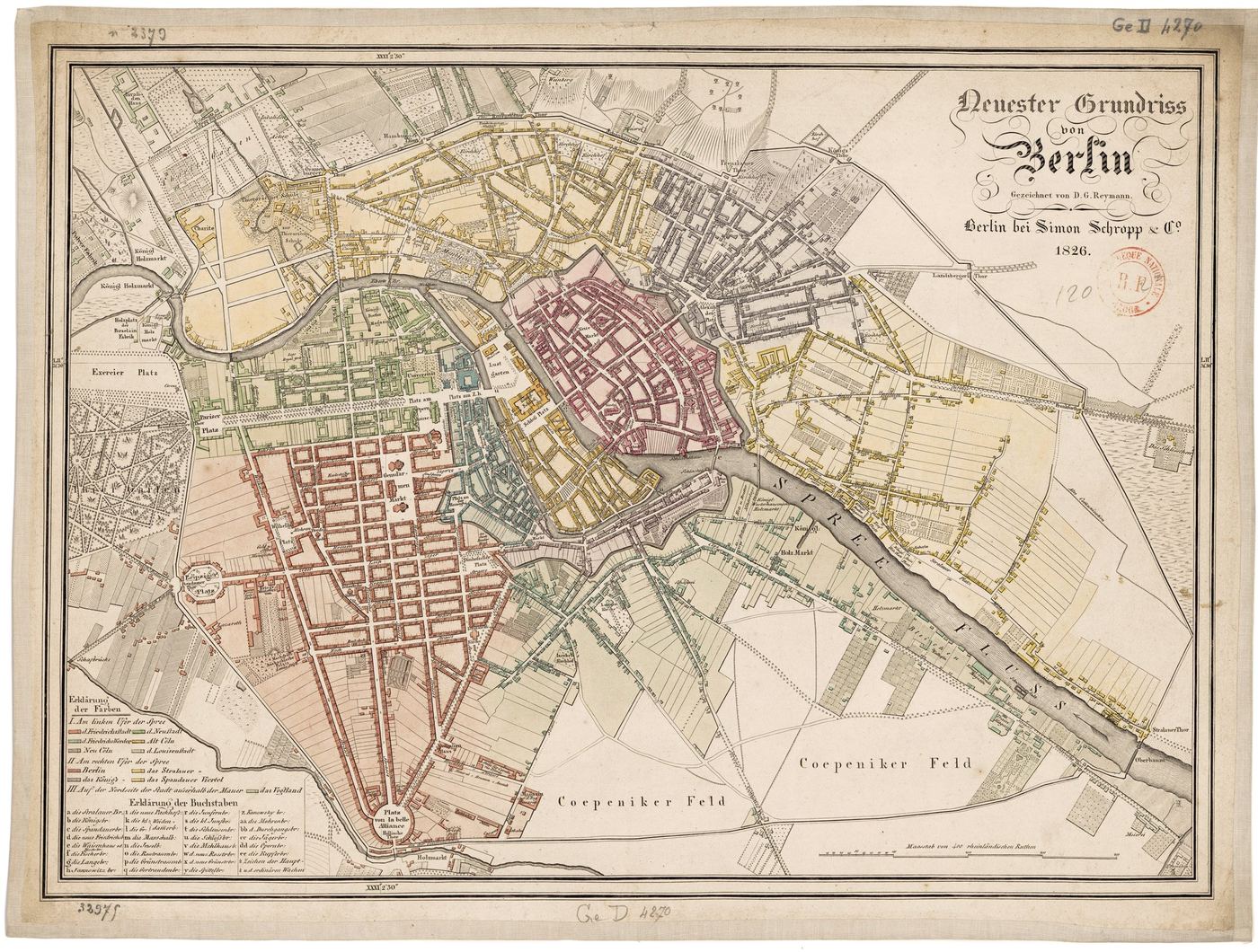
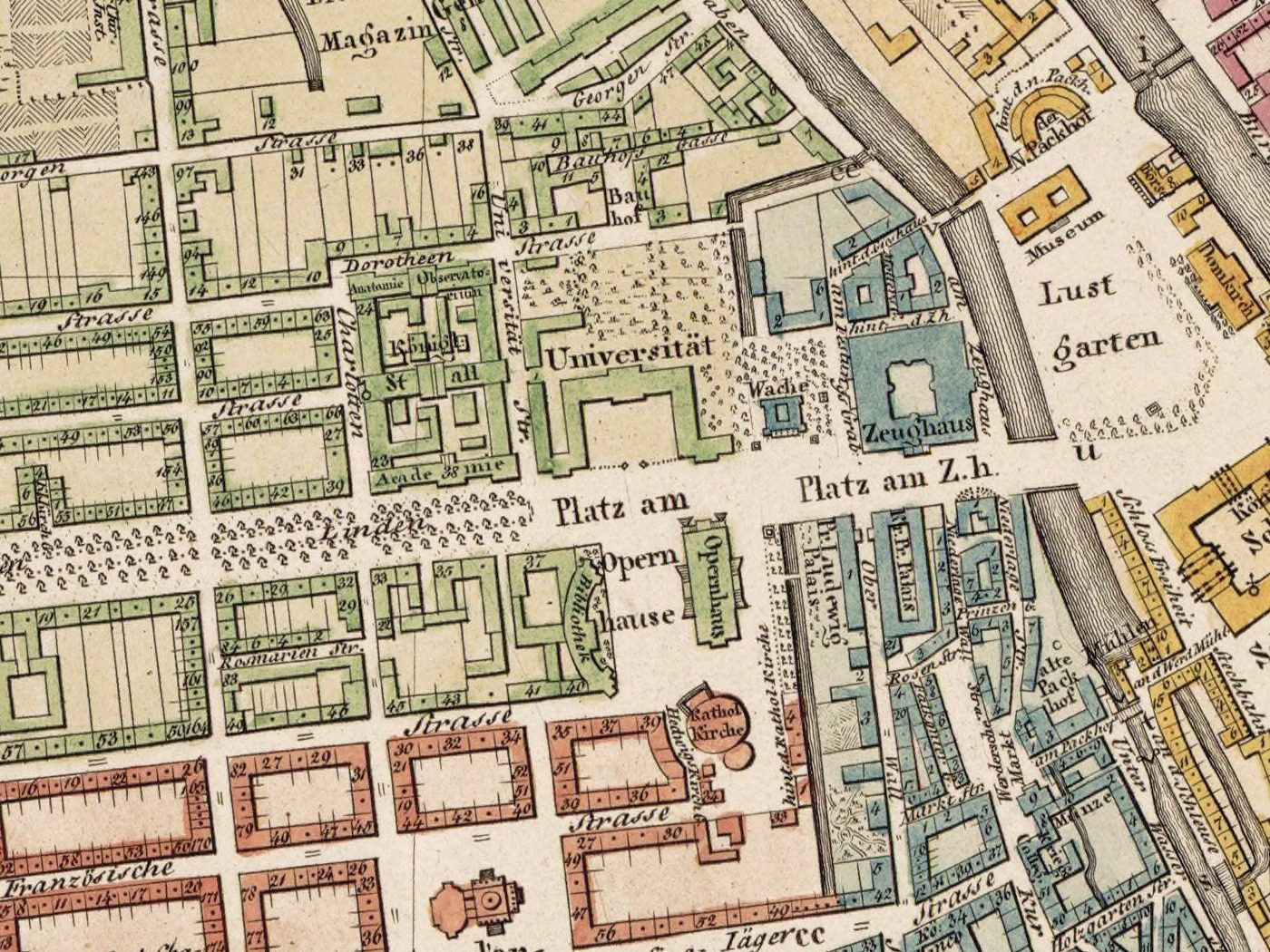
This map of Berlin from 1826 shows the layout of a city of over two hundred thousand people, surrounded by a customs wall, with fields starting where the wall stops.
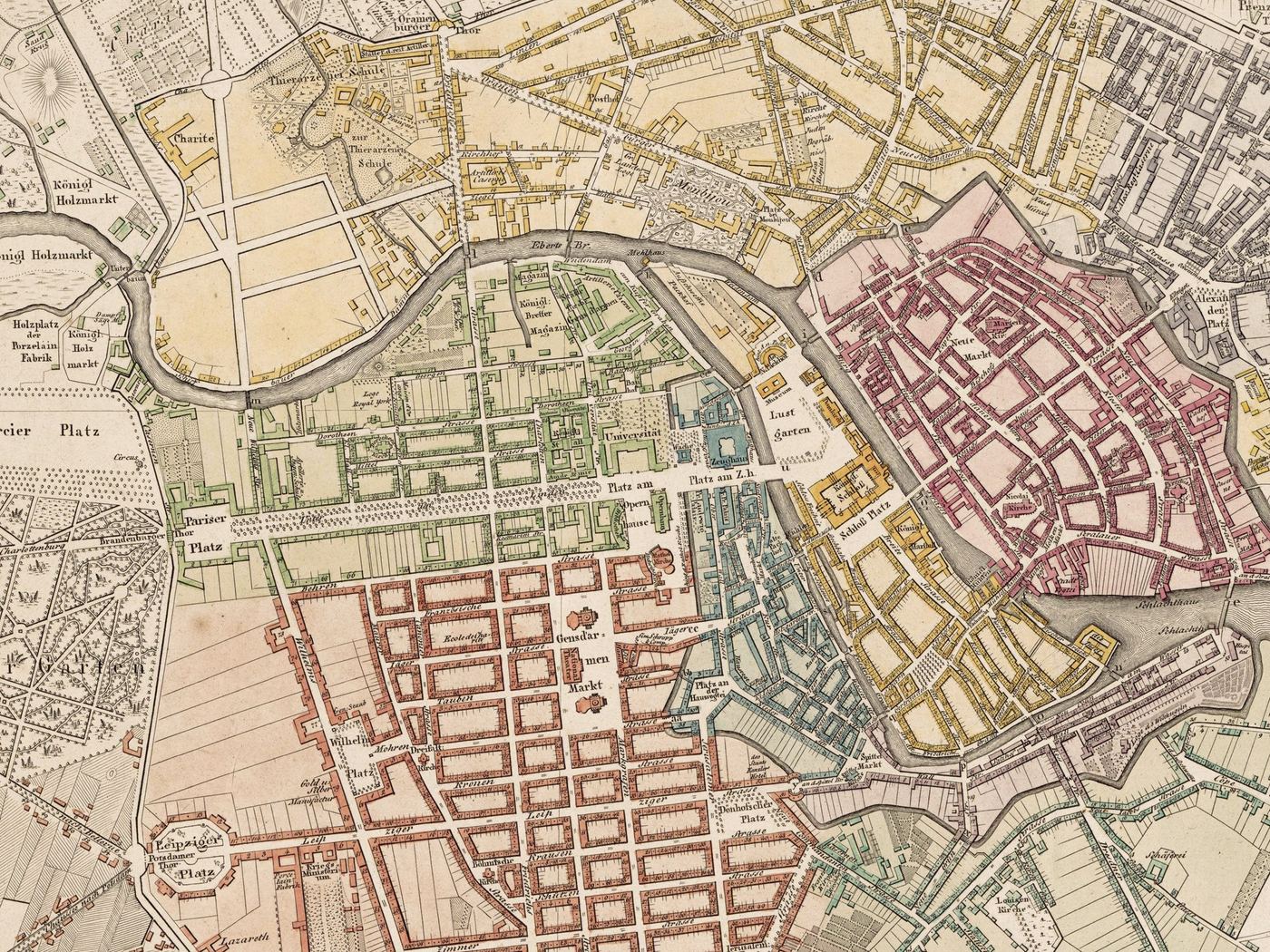
Unter den Linden, the city's central corridor, lined with four rows of lime trees, runs east from the Brandenburg Gate and ends at the palace.
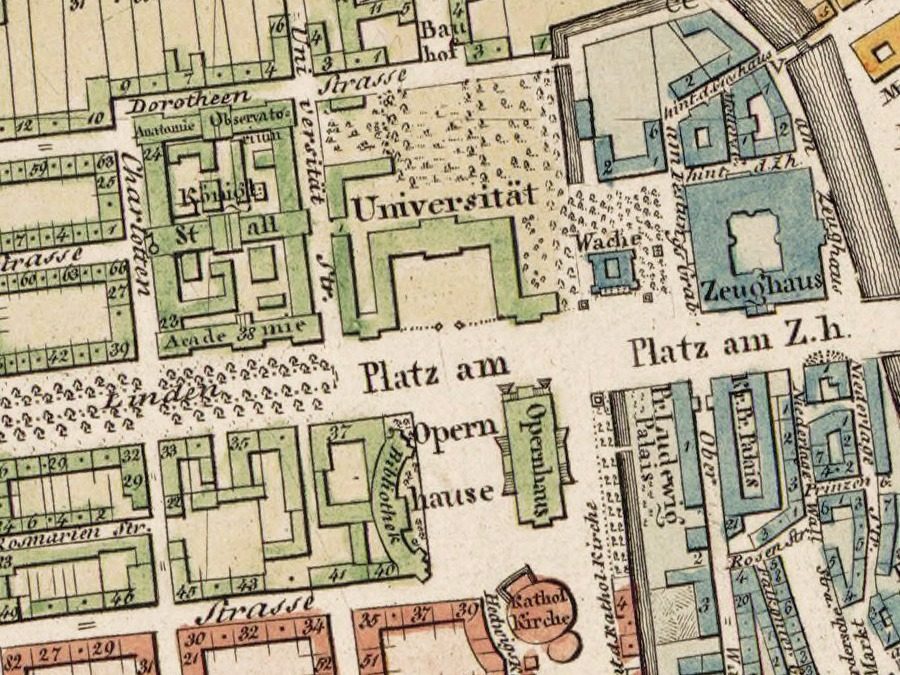
And here, set back behind its courtyard: the Universität. Twenty years earlier this was still a palace, built for Frederick the Great's younger brother.
Directly across the avenue is the Platz am Opernhause. If you were standing in that square facing north you would see the whole University building.
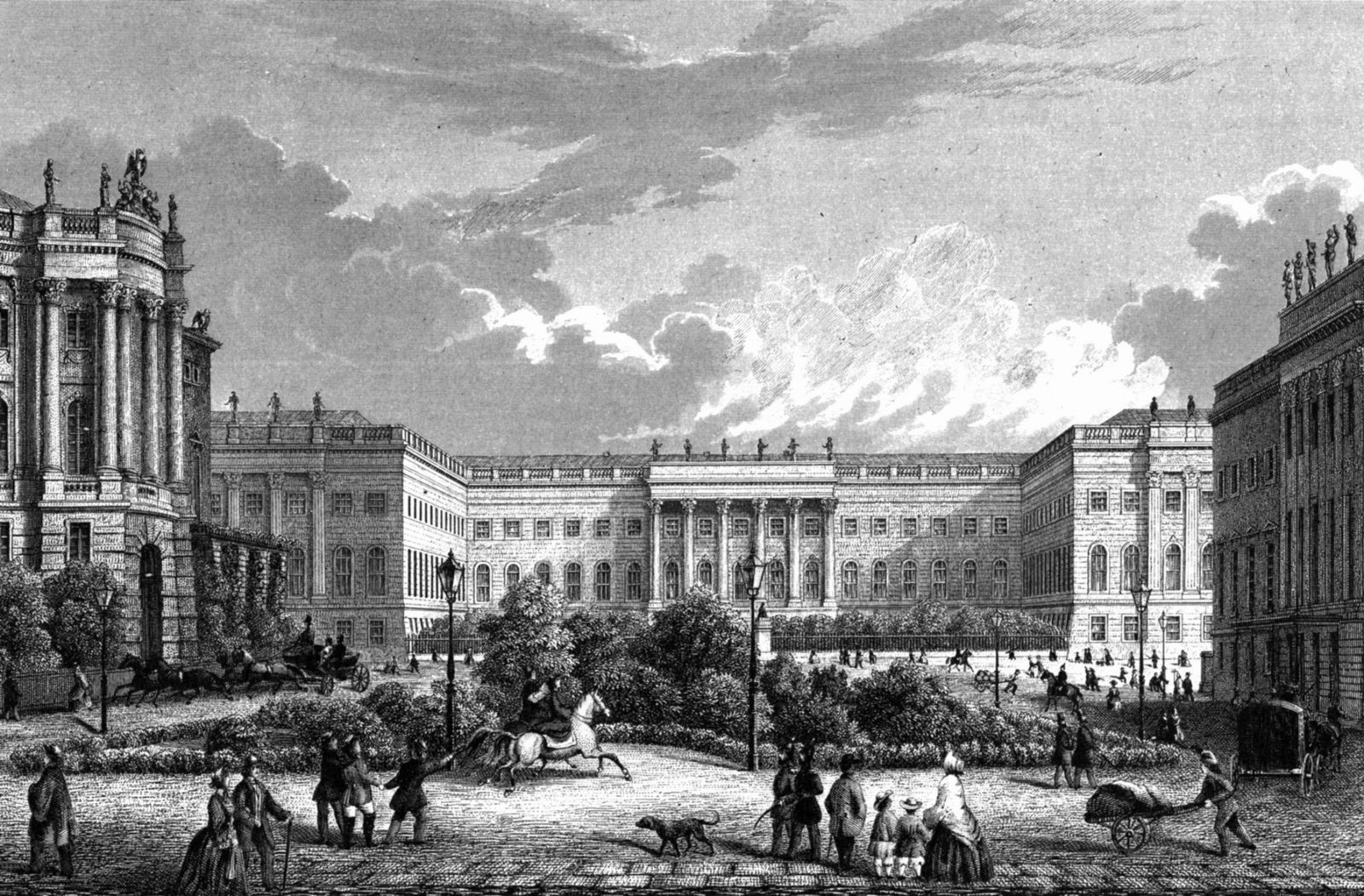
This is the view from the Opernplatz, looking north. You can see the university across the avenue, where the philosophy lectures took place.
Staterooms in the former palace had been converted to lecture halls, with benches for students to sit on.
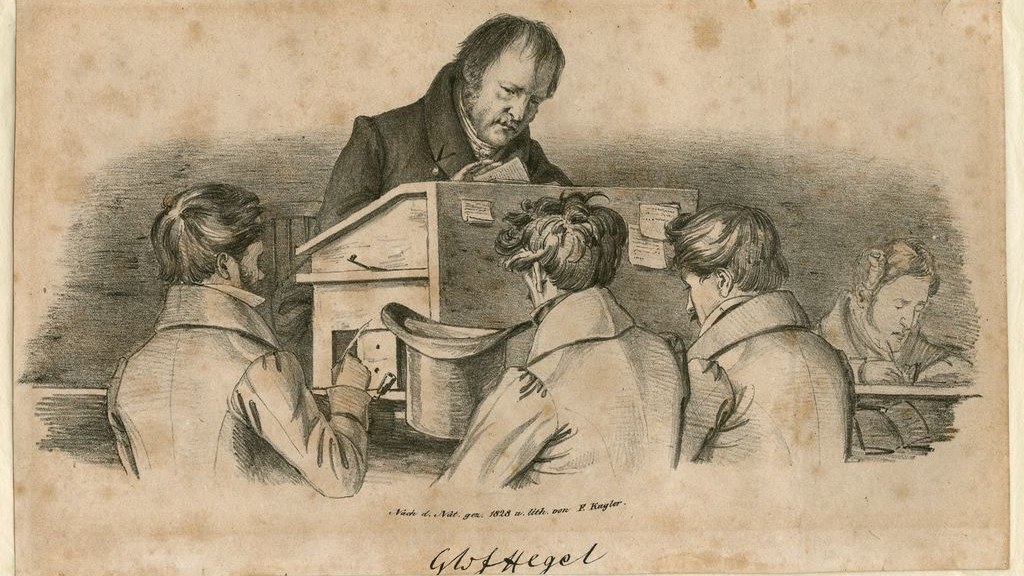
Franz Kugler, then a student in Berlin, drew Hegel at the lectern in 1828 and inscribed the sheet drawn from life.
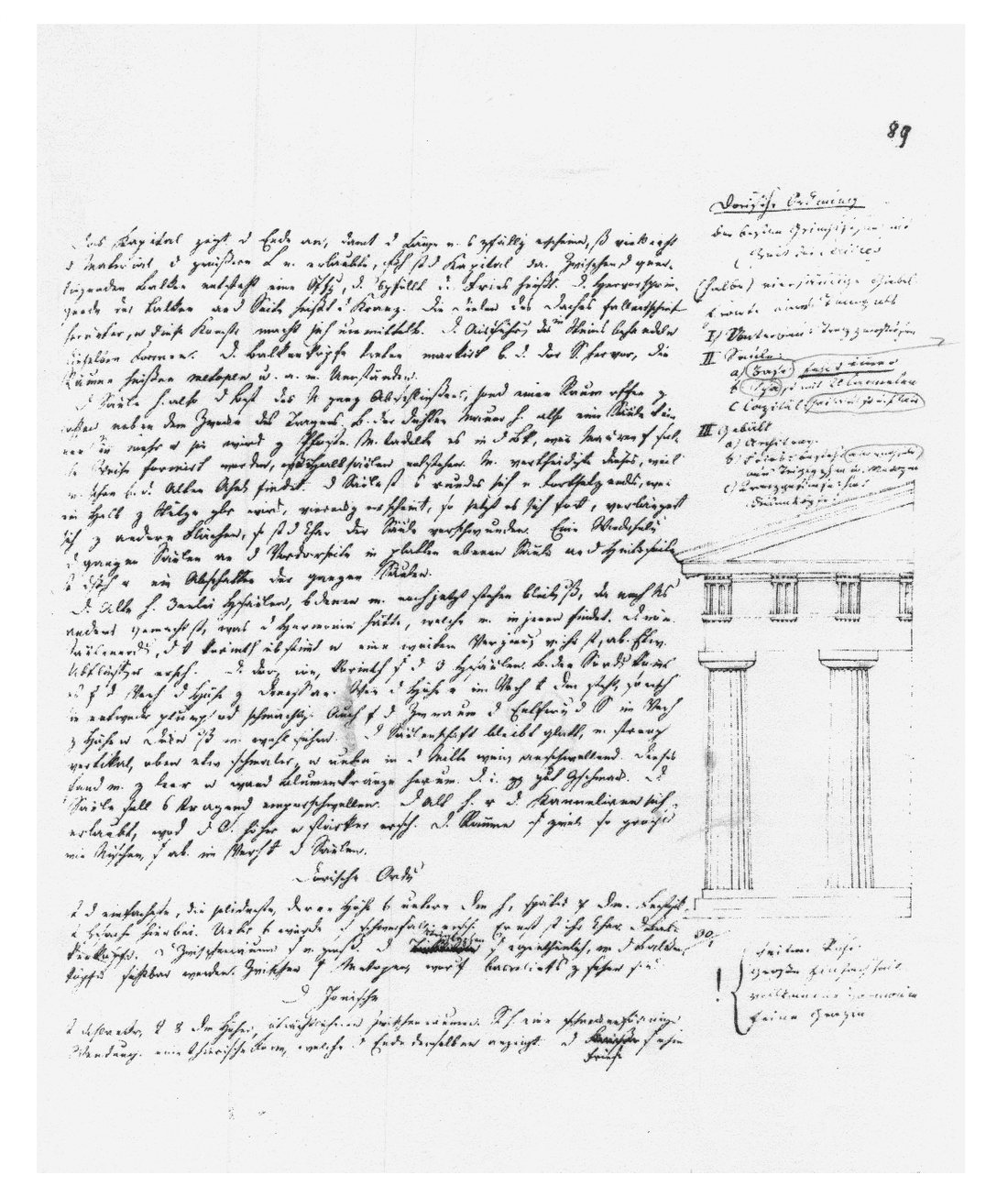
What Hegel said in these lectures survives because a twenty-year-old named Adolf Heimann wrote it down.
This is a page of his notebook. The Doric columns in the margin were drawn while Hegel was speaking.
The version of Hegel's Aesthetics everyone reads is Hotho's 1835 reconstruction, a tidied-up, systematized version of multiple sets of lectures. This simulation is built from Heimann's notes instead, which gives us a more immediate account of what hearing Hegel lecture would have been like.
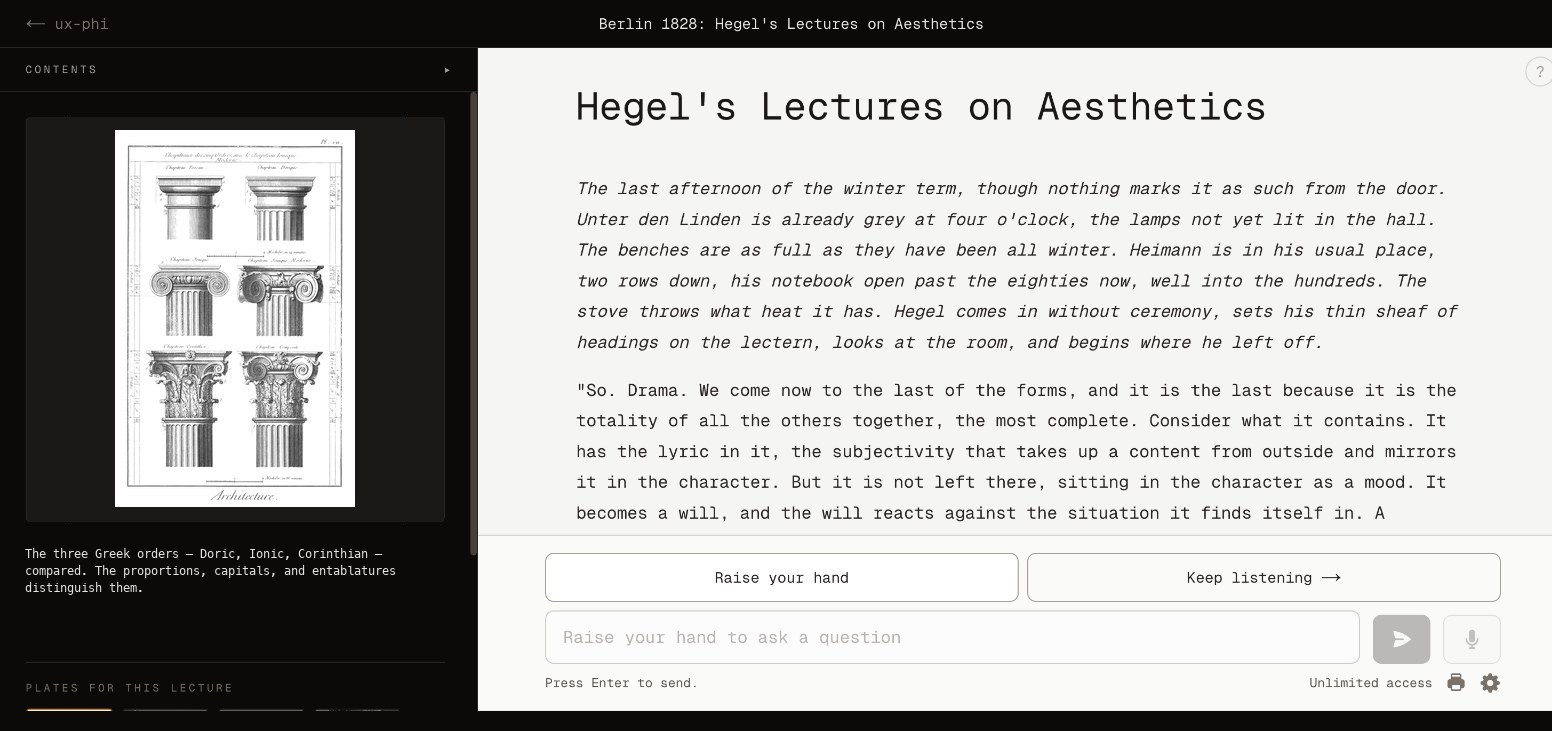
This lecture-based simulation begins with you taking a seat on a bench in a cold room in the Friedrich-Wilhelms-Universität. The lecture arrives in chunks and stops at natural breaks, where you choose whether to raise your hand and ask a question or let Hegel keep going.
When Hegel mentions a work of art, it appears in the panel beside him. On screen there is the plate from the first lectures: the three Greek orders, Doric, Ionic, and Corinthian, side by side. When Hegel mentions music, some of it you can play in the browser.
At a break in the lecture, raise your hand and type your question. Ask him about anything you want — but if you mention something he couldn't know about (Manet, Duchamp, Godzilla), he'll ask you to explain it.
Or let him go on, and the next part of the lecture arrives.
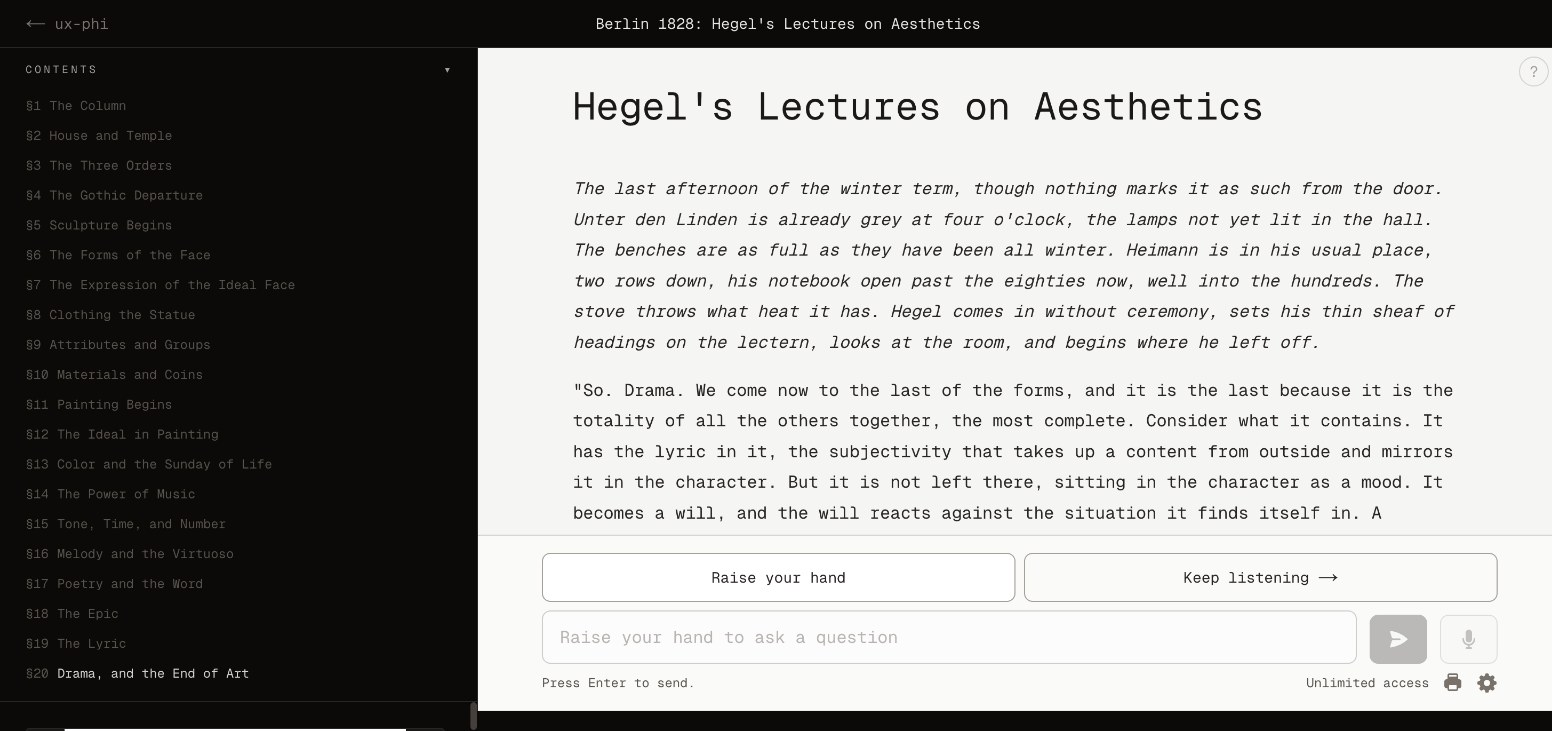
At the top of the panel, there is a Contents tab that shows you all of the topics the course covers: from Doric, Ionic, and Corinthian columns, through classical sculpture, to Dutch painting, the power of music, and finally the End of Art. If you want to jump ahead to a topic at any time, click on it and that lecture will start.